
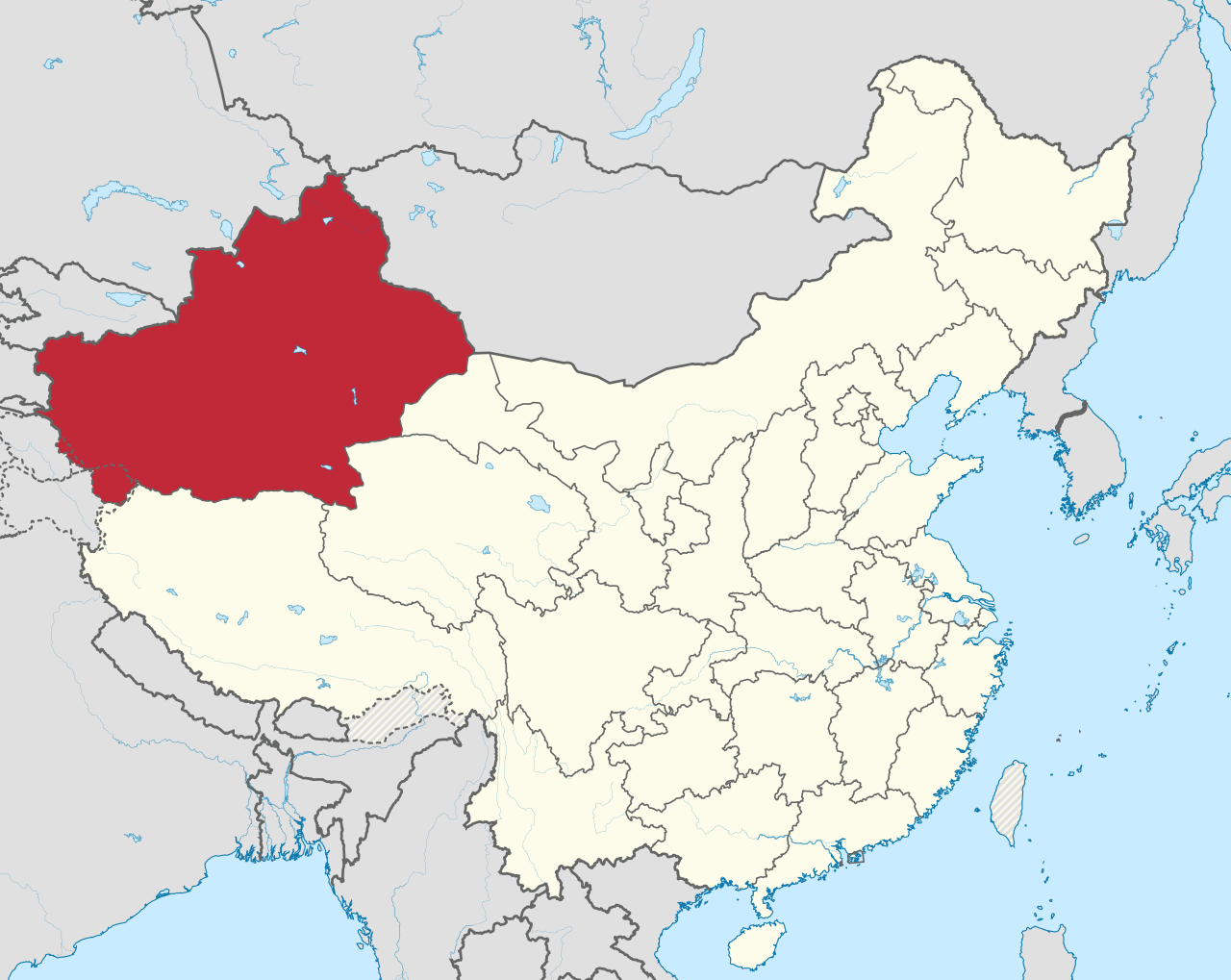
Xinjiang
Xinjiang, previously romanized as Sinkiang, officially the Xinjiang Uygur Autonomous Region, is an autonomous region of the People's Republic of China (PRC), located in the northwest of the country at the crossroads of Central Asia and East Asia. Being the largest province-level division of China by area and the 8th-largest country subdivision in the world, Xinjiang spans over 1.6 million square kilometres (620,000 sq mi) and has about 25 million inhabitants. Xinjiang borders the countries of Afghanistan, India, Kazakhstan, Kyrgyzstan, Mongolia, Pakistan, Russia, and Tajikistan. The rugged Karakoram, Kunlun and Tian Shan mountain ranges occupy much of Xinjiang's borders, as well as its western and southern regions. The Aksai Chin and Trans-Karakoram Tract regions are claimed by India but administered by China. Xinjiang also borders the Tibet Autonomous Region and the provinces of Gansu and Qinghai. The most well-known route of the historic Silk Road ran through the territory from the east to its northwestern border. High mountain ranges divide Xinjiang into the Dzungarian Basin (Dzungaria) in the north and the Tarim Basin in the south. Only about 9.7 percent of Xinjiang's land area is fit for human habitation. It is home to a number of ethnic groups, including the Chinese Tajiks (Pamiris), Han Chinese, Hui, Kazakhs, Kyrgyz, Mongols, Russians, Sibe, Tibetans, and Uyghurs. There are more than a dozen autonomous prefectures and counties for minorities in Xinjiang. Older English-language reference works often refer to the area as Chinese Turkestan, Chinese Turkistan, East Turkestan and East Turkistan. With a documented history of at least 2,500 years, a succession of people and empires have vied for control over all or parts of this territory. The territory came under the rule of the Qing dynasty in the 18th century, which was later replaced by the Republic of China. Since 1949 and the Chinese Civil War, it has been part of the People's Republic of China. In 1954, the Chinese Communist Party (CCP) established the Xinjiang Production and Construction Corps (XPCC) to strengthen border defense against the Soviet Union and promote the local economy by settling soldiers into the region. In 1955, Xinjiang was administratively changed from a province into an autonomous region. In recent decades, abundant oil and mineral reserves have been found in Xinjiang and it is currently China's largest natural-gas-producing region. From the 1990s to the 2010s, the East Turkestan independence movement, separatist conflict and the influence of radical Islam have resulted in unrest in the region with occasional terrorist attacks and clashes between separatist and government forces. These conflicts prompted the Chinese government to commit a series of ongoing human rights abuses against Uyghurs and other ethnic and religious minorities in the province including, according to some, genocide.
One-Day Xinjiang Tour Itinerary Recommendations
Theme:
Silk Road Wonders + Ethnic Charm + Desert Oases
Suitable for:
Short trips to Urumqi/Turpan/Kashgar, optimal with chartered car/high-speed rail + taxi
Practical Tips
Climate Notes:
Turpan summer: UV sleeves essential | Kashgar has 2-hour time difference with Beijing
Ticket Prices:
Tianchi ¥155 (with shuttle) | Flaming Mountains ¥40 | Old Town ¥30
Must-Try Foods:
Urumqi: Big plate chicken, belt noodles
Turpan: Bean noodles, mulberry juice
Kashgar: Nut cakes, baked eggs
Optimization Tips:
Urumqi alternative: Nanshan Pastures (summer retreat)
Turpan extension: Kumtag Desert (requires 2 days)
Kashgar pro tip: Stay in old town homestay for dawn photography
(Note: Carry ID for security checks; Some sites need border permits)
Option 1:
Urumqi Heavenly Mountain Escape
Best for:
Nature lovers, families
Transport:
1.5-hour chartered car from downtown
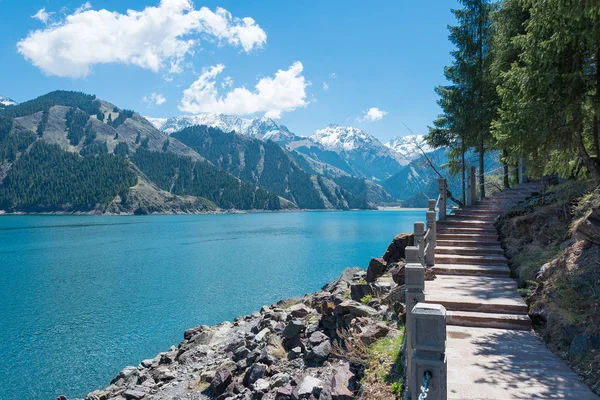
08:00-10:30 Tianchi Lake
Shuttle to alpine lake | Bogda Peak views | West Queen Mother Temple hike
11:00-12:30 Kazakh Family Visit
Eagle dance show | Salt milk tea with bauyrsak (fried dough)
12:30-14:00 Lakeside Lunch
Recommended: Snow trout + wild mushroom noodles
14:30-17:00 Grand Bazaar
Buy Hetian jade & Atlas silk | Uyghur folk dance
18:00 Lingxiang Alley Night Market
Samosa + kvass + nut cakes | Multicultural food fusion
Option 2:
Turpan Desert Heritage
Best for:
History buffs, photographers
Transport:
1.5-hour bullet train from Urumqi + car
07:30-09:30 Karez Well System
Underground "Great Wall" | Ancient Uyghur irrigation
10:00-12:00 Flaming Mountains
70℃ surface heat | Camel ride "Journey to the West" style
12:30-14:00 Vineyard Lunch
Whole roasted lamb + seedless grapes (summer only)
14:30-17:00 Jiaohe Ruins
UNESCO Tang Dynasty city | Drone photography
18:00 Grape Valley Nights
Uyghur home visit | Learn Maxrap dance
Option 3:
Kashgar Old Town Immersion
Best for:
Cultural explorers, photographers
Transport:
Walking + sightseeing cart
09:00-11:30 Id Kah Mosque
Xinjiang's largest mosque | Friday prayer spectacle
12:00-14:00 Kashgar Old Town
Rainbow door photography | Pottery-making workshop
14:30-16:00 Century-Old Teahouse
Rose jam naan + "jar meat" + brick tea (live folk music)
16:30-18:30 Apak Hoja Tomb
Islamic architecture | "Fragrant Concubine" show (6pm)
19:00 Han Bazaar
Grilled pigeon + yogurt rice | Handmade copper souvenirs